
Drain Field Repair in Chattanooga, TN
We connect Chattanooga-area homeowners with independent local septic pumping, inspection and repair companies for free, no-obligation quotes. Drain field and leach field problems go to the permitted installers among them. Here is why fields struggle in Hamilton County’s clay and karst, the signs, typical repair and replacement costs, and the two permits every repair needs.
Get a Free Quote Call (727) 300-6656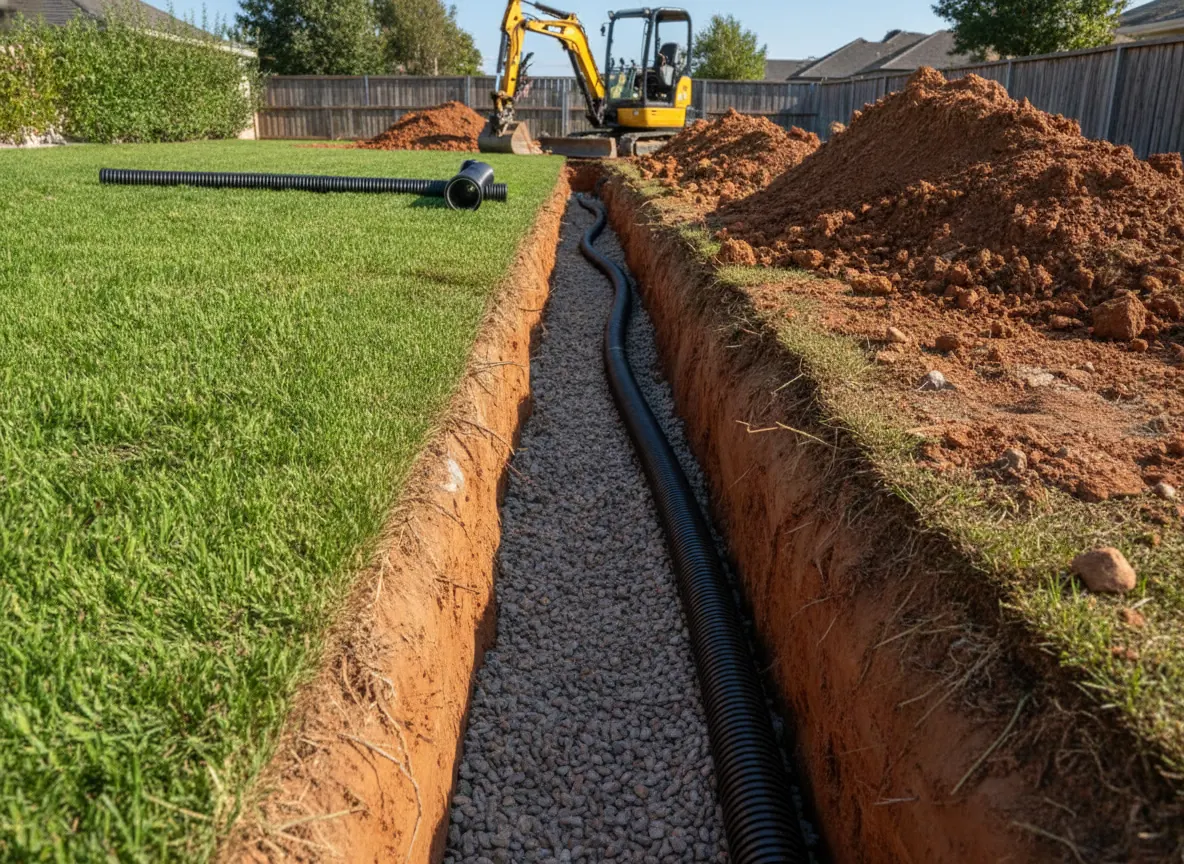
Why drain fields struggle in Hamilton County
A drain field works by letting treated liquid from the tank soak into soil. Chattanooga’s soil is the difficulty. East of the Tennessee River the county sits on the Ridge and Valley province, where limestone has weathered into clay. The NRCS describes the Talbott series as clayey limestone residuum with “moderately slow permeability” and bedrock at 20 to 40 inches, and the Collegedale series, named for its type location on Tallant Road, as clay or silty clay with the same slow permeability. Fullerton soils add chert gravel. On the plateau, Signal Mountain and Lookout Mountain sit on sandstone with thin soils over rock.
Below the clay is karst. A UTC geologist has described the area as “a region that is prone to sinkhole development,” which is why Tennessee law (TCA 66-5-212) makes sellers disclose known sinkholes. TDEC’s Rule .07 accepts percolation rates of 10 through 75 minutes per inch, and every lot must hold a duplicate field area under Rule .03. Lots at the edge of those tests are the ones that get alternative-system permits, or a repair design later.
Signs the drain field, not the tank, is the problem
- Soft, spongy or wet ground over the field lines when it has not rained, or a strip of lawn greener than the rest.
- Liquid surfacing at the end of a line or at the distribution box.
- Drains slow again days after a pump-out. If the tank refills to the outlet quickly, the field is not taking water; pumping only buys time.
- Backups during or after heavy rain, when saturated soil cannot accept more liquid. August 12, 2025 put 6.42 inches on Lovell Field in one day, the second-wettest day since 1879.
- Liquid level above the outlet when the tank is opened, or staining on the walls that shows it has been there before.
None of these tells you on its own that the field must be replaced. A broken distribution box, a crushed line under a driveway, roots, or a tank that went unpumped until solids reached the field each has a different fix. A septic inspection sorts that out before anyone quotes a number.
Repair options installers use here
Distribution box repair or replacement
A tilted or collapsed D-box sends all the flow to one line and floods it. Resetting or replacing the box is one of the least expensive field repairs.
Line jetting and root removal
Where the pipe is intact but clogged, hydro-jetting and root cutting can restore flow; a failed pipe needs more than jetting.
Partial line replacement or added lines
Replacing a crushed section or adding line into the lot’s reserve area, under a county repair design, is often the middle option between patching and starting over.
Full replacement, conventional or alternative
When the county’s design calls for it, a new field is built in the duplicate area. On clay or shallow-rock lots that can mean a low-pressure pipe, mound or drip system under TDEC’s alternative-system rules rather than a conventional trench.
Homes in Ooltewah, Apison and Collegedale were mostly built after 2000 (ACS 2024 5-year), often on these soils, while 61.4 percent of Harrison’s housing dates from 1970–1999. Read more in why clay, rock and karst make drain field repairs different here.
Drain field repair and replacement prices
| Item | Typical range |
|---|---|
| Drain field repair or replacement | $5,000–$12,000 (about $7,000 typical; up to $20,000) |
| Septic inspection to diagnose the field: standard / with camera | $100–$200 / $250–$1,175 |
| Septic tank pumping during the diagnosis, 1,000-gallon tank | $225–$400 |
| Hamilton County repair permit (government fee) | $40 |
| Hamilton County new-system permit (government fee) | $440 |
Typical national ranges from Fixr (2025) and HomeAdvisor (2026) — estimates, not quotes. Hamilton County fees are government charges, not contractor prices.
Repair work is referred, never priced by us. The installer’s quote follows the county’s repair design: inspection, permit application, design, then a written price. See the cost guide for how the pieces add up.
The two permits every drain field repair needs
The installer’s permit. TDEC Rule 0400-48-01-.19 bars anyone from the business of “constructing, installing, altering or extending or repairing” a subsurface sewage disposal system without an annual TDEC installer permit. Hamilton County, a contract county, also requires its own installer license. Both are public in TDEC’s Installers & Pumpers DataViewer and the county’s 2026 installer and pumper list.
Your repair permit. Rule .06(3): “Repair permits are necessary when installing tanks (septic or dosing) and/or installing absorption field line in order to correct an existing failure.” In Hamilton County the repair permit costs $40 from Groundwater Protection (1250 Market St, Chattanooga; 423-209-7876), applied for online, and the county designs the repair and inspects it. County Resolution 423-28 doubles the fees for work started before the permit is issued. In Bradley County the repair permit comes from TDEC’s Chattanooga Environmental Field Office at no fee, with a $100 construction inspection.
Two more thresholds, unconfirmed for septic work specifically: contracts of $25,000 or more require a Tennessee contractor license (TCA 62-6-102), and residential work from $3,000 to $24,999 in Hamilton County falls under the state’s Home Improvement license. Under Rule .13(2), a malfunctioning system can draw a written notice giving the owner up to 30 days to repair it. This is general information, not legal advice.
Septic Pumping Chattanooga does not repair or install anything. The independent installers you hear from through the quote form quote the work and pull the permits; we usually reply the same day.
Drain field repair FAQ
Can a drain field be repaired, or does it have to be replaced?
Often it can be repaired. A crushed line, a failed distribution box, roots or a tank that was never pumped can all be corrected without a new field. Whether yours is a repair or a replacement is decided by an inspection and the county’s repair design; Hamilton County Groundwater Protection designs the repair when it issues the $40 permit. Ask any company quoting a full replacement to show the evidence first.
Why do drain fields fail in the Chattanooga area?
Soil and water. Much of Hamilton County sits on limestone residuum: Talbott soils reach bedrock at 20 to 40 inches and Collegedale soils are clay with “moderately slow permeability” (NRCS series descriptions), while plateau soils on Signal and Lookout Mountain are thin over sandstone. Add 19.6 inches of rain from December through March (NOAA normals) and a field that is undersized, compacted or overloaded with solids stops accepting water.
How much does drain field repair cost?
Typical national ranges for drain field repair or replacement run $5,000–$12,000, with about $7,000 typical and some replacements reaching $20,000 (HomeAdvisor, 2026). Smaller fixes such as a distribution box cost far less. Hamilton County’s repair permit is $40; starting work without it doubles the county’s fees. These are estimates, not quotes; the installer’s price follows the county’s repair design.
Do I need a permit to repair my own drain field in Tennessee?
Yes. TDEC Rule 0400-48-01-.19 exempts an owner doing work on their own residence from the installer permit, but states that nothing removes “the requirement that any person must secure a construction permit.” Rule .06(3) says repair permits are necessary when installing tanks or absorption field line to correct an existing failure. In Hamilton County that is the $40 repair permit from Groundwater Protection, which also inspects the work.
Do drain field additives or restoration treatments work?
No additive is a substitute for finding out why the field is wet. Soil fracturing and similar treatments exist and some installers offer them, but the county’s repair process is built around correcting the failure, not around a product poured down the drain. Before paying for a treatment, get the inspection finding in writing and ask the installer whether the county would permit it as the repair.
Slow drains or a soggy yard? Get a clear quote first.
Free, no-pressure quotes across Chattanooga, Ooltewah, Soddy-Daisy, Signal Mountain and Hamilton County.