
Septic Inspection in Chattanooga, TN
We connect Chattanooga-area homeowners with independent local septic pumping, inspection and repair companies for free, no-obligation quotes. Buyers and sellers included. Here is what a septic inspection covers, what Tennessee does and does not require when a house on septic changes hands, and what Hamilton County’s own inspection letters are.
Get a Free Quote Call (727) 300-6656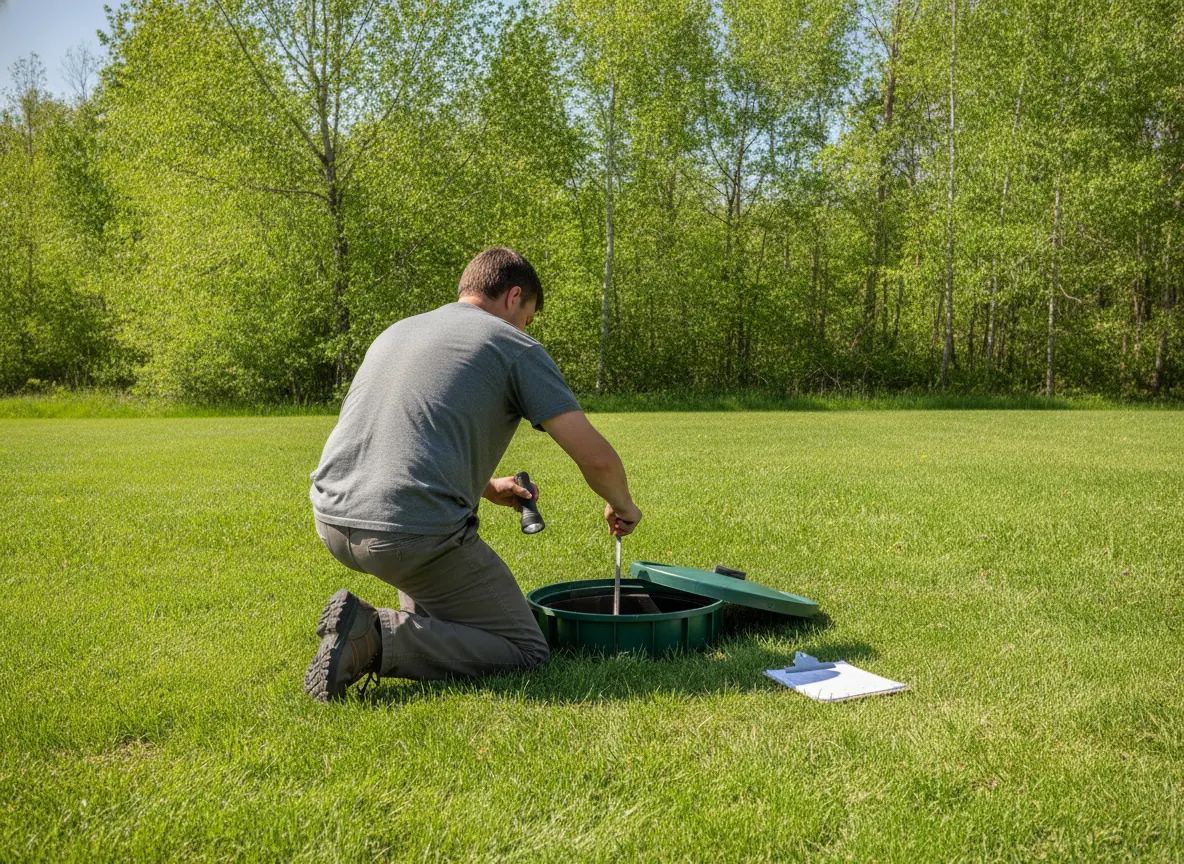
What a septic inspection includes
A septic inspection is an evaluation of the whole system: tank, baffles, filter, distribution box and drain field. The inspector locates the tank from the county permit sketch or by probing, opens the lids, and records the liquid level before anything is pumped. A level above the outlet pipe, or stains on the walls showing it has been there before, means the field has not been accepting water. The tank is then usually pumped so the inlet and outlet baffles, the walls and the floor can be seen rather than guessed at.
From there the inspector checks the effluent filter if one is fitted, opens the distribution box, probes or digs test spots over the field lines to look for saturation, and runs water from the house to watch how the system responds under load. Where the lines are suspect, a camera is run through them and priced separately. A dye test can confirm whether surfacing water is coming from the system. You should receive a written report with photos and a plain statement of what was found; for the visit in order, see how it works.
Selling or buying a house on septic in Tennessee
Tennessee has no point-of-sale septic inspection law, and the state has no license category for septic inspectors. Three rules shape the transaction instead, and this is general information rather than legal advice.
- Agents must mention the inspection letter. TREC Rule 1260-02-.37 (“Septic System Inspection Letters”) says a licensee preparing an offer “shall provide in the offer and make the buyer aware that, for a fee, a septic system inspection letter is available” through TDEC’s groundwater protection division. In Hamilton County that letter comes from the county office.
- The home-inspection report excludes septic by law. TCA 62-6-302 requires every home-inspection report to carry a statement that it does not address subterranean systems, including sewage disposal. A septic inspection is a separate service by a separate company.
- Sellers disclose what they know. The Tennessee Residential Property Disclosure asks whether the seller is aware of defects in the sewer or septic system, and TCA 66-5-212 requires disclosure of the results of any known percolation test and of any known sinkhole on the property.
One more check for new construction: TCA 47-18-104(b)(41) makes it unlawful to market a newly built home on septic as having more bedrooms than its permit allows unless the permitted number is disclosed in writing before a sales agreement. The permit on file with the county states the bedroom count the system was designed for, so pull it. More on the paperwork side in selling a house on septic in Tennessee.
Hamilton County’s Inspection Letter and Recertification Letter
Hamilton County is a TDEC “contract county,” so septic permitting and records are handled by the county’s Division of Groundwater Protection at 1250 Market Street in Chattanooga (423-209-7876) rather than by the state office. Among the services it sells are an Inspection Letter ($105) and a Recertification Letter ($180). These are government products: a county inspector visits and the county issues the letter. The county does not publish exactly what each letter certifies or how long it is considered current, so ask the office before you order one, and expect the form to ask the age of the house and whether it is vacant.
A private septic inspection and a county letter are not substitutes for each other. The county letter is the document TREC Rule 1260-02-.37 refers to and what some buyers’ agents will ask for; the private inspection is the one that pumps the tank, photographs the baffles and probes the field. Many buyers get both. In Bradley County and other non-contract counties, TDEC’s Chattanooga Environmental Field Office handles the equivalent inspection of an existing system.
Septic inspection prices in Chattanooga
| Item | Typical range |
|---|---|
| Septic inspection, standard | $100–$200 |
| Septic inspection with camera of the lines | $250–$1,175 |
| Pumping during the inspection, by tank size: 750 / 1,000 / 1,250 / 1,500 gal | $175–$300 / $225–$400 / $300–$600 / $345–$600 |
| Extra for an unknown or buried lid (locating and digging) | varies; ask for a flat fee |
| Hamilton County Inspection Letter / Recertification Letter (government fee) | $105 / $180 |
Typical national ranges from Fixr (2025) and HomeAdvisor (2026) — estimates, not quotes. Hamilton County fees are government charges, not contractor prices.
Who pays is negotiable between buyer and seller; neither statute above assigns it. Buyers usually order the inspection during the inspection period, and sellers in Ooltewah, Apison and Collegedale, where most homes were built after 2000 (ACS 2024 5-year), sometimes order one before listing so there are no surprises. Full pricing context is in the cost guide.
Ask for the written finding, not a verdict
An inspection’s job is to describe the system’s condition. If the report says the field is saturated or the tank is cracked, the next step is a repair quote from a TDEC-permitted installer and, for drain field or tank work, a $40 repair permit from Hamilton County Groundwater Protection, which also designs the repair. Tennessee’s consumer protection act (TCA 47-18-104(b)(13)) makes it unlawful to represent that a repair is needed when it is not, so a company that goes straight from “inspection” to a large replacement price should be asked to put the evidence in writing. A second opinion is cheap by comparison; see drain field repair for how those decisions are made.
Septic Pumping Chattanooga does not inspect systems and issues no letters. The independent companies you hear from through the quote form do the work, and the TDEC Installers & Pumpers DataViewer and the county’s 2026 “List of Septic Installers and Pumpers” let you check their permits. We usually reply the same day.
Septic inspection FAQ
Is a septic inspection required when buying a house in Tennessee?
No. Tennessee has no point-of-sale septic inspection law. What the rules do require is disclosure: TREC Rule 1260-02-.37 makes the agent preparing an offer tell the buyer that, for a fee, a septic system inspection letter is available through TDEC or the county. The letter is optional, and nothing requires a passing result to close. Lender rules were not part of our research, so ask your lender directly.
Who can do a septic inspection in Tennessee?
There is no Tennessee license for septic inspectors. In practice, septic inspections are done by pumping and installation companies, which hold TDEC pumper or installer permits, and by Hamilton County’s Groundwater Protection office when you buy an Inspection Letter ($105) or Recertification Letter ($180). Ask who will open the tank, whether it will be pumped, and whether you get a written report with photos.
Does a home inspector check the septic system?
Not as part of the standard report. TCA 62-6-302 requires every Tennessee home-inspection report to state that it does not address subterranean systems, including sewage disposal. That is why a septic inspection is booked separately from the general property inspection, usually with a pumping or installation company that can open the tank, pump it and look at the baffles and field.
Can a septic tank be inspected without pumping it?
A surface-level look is possible, but a full tank hides most of what matters. With the tank pumped, the inspector can see whether the inlet and outlet baffles are intact, whether the walls are cracked, and whether the liquid level had been sitting above the outlet, which points to a drain field that is not accepting water. Most pre-purchase inspections include a pump-out for that reason.
What does a septic inspection cost in Chattanooga?
Typical national ranges are $100–$200 for a standard septic inspection and $250–$1,175 when a camera is run through the lines (HomeAdvisor, 2026), plus the pump-out if the tank is emptied. Hamilton County’s Inspection Letter ($105) and Recertification Letter ($180) are separate government fees. These are estimates, not quotes; get written prices from more than one company.
Slow drains or a soggy yard? Get a clear quote first.
Free, no-pressure quotes across Chattanooga, Ooltewah, Soddy-Daisy, Signal Mountain and Hamilton County.