
How Septic Quotes and a Pumping Visit Work in Chattanooga
Septic Pumping Chattanooga is a free quote service, not a septic company. We connect Chattanooga-area homeowners with independent local septic pumping, inspection and repair companies for free, no-obligation quotes. Here is our part, and what a pumping or septic inspection visit typically involves.
Get a Free QuoteOur part: getting you quotes
We don’t pump, inspect or repair anything ourselves. The company you choose does the work and contracts with you directly.
You share the details
Fill out the free quote form or call. Tell us the number of bedrooms (that is how Tennessee sizes tanks), when the tank was last pumped, whether you know where the lid is, and anything you have noticed: slow drains, gurgling, a wet or green patch over the field, an alarm light, a smell after rain. If the request is for a home sale, say so; the timeline and the paperwork are different.
Local companies follow up
Your request goes to independent septic companies that serve your area, from Chattanooga to Ooltewah, Hixson, Soddy-Daisy and Cleveland. We usually reply the same day. August through October, the driest months in Chattanooga’s NOAA normals, is the easiest time to schedule; after a multi-inch rain, waits get longer.
You compare
Pumping is usually quoted as a flat price by tank size, with locating or digging, filter cleaning and an inspection listed separately. Repairs should come as a written scope. Compare prices against our cost guide and the questions below.
You decide
You choose which company to hire, if any. There is no obligation, and the quotes are free.
Before you hire: what to ask for
Tennessee regulates septic work through TDEC Rule Chapter 0400-48-01, and Hamilton County runs its own permit office as a contract county. The credentials are public, so the questions are easy to check:
- For pumping, the company’s TDEC Septic Tank Pumping Contractor permit number (Rule 0400-48-01-.20; renewed each year with a truck inspection) and its Hamilton County pumper license. Verify both on TDEC’s Installers & Pumpers DataViewer and the county’s 2026 List of Septic Installers and Pumpers. The permit number should be lettered on both sides of the truck.
- For any repair, drain field or installation work, a TDEC installer permit (Rule .19) plus a county installer license, and who will pull the homeowner’s $40 repair permit from Hamilton County Groundwater Protection before work starts.
- Where the septage goes: a treatment plant (haulers using the City of Chattanooga system hold a $100-per-vehicle annual permit) or a TDEC-permitted land-application site.
- Whether the price includes digging to the lid, rinsing the effluent filter, checking the baffles and writing down the sludge and scum levels.
- For a home sale, whether they will open the tank for the county’s Inspection Letter ($105) and what their own written report covers. Tennessee has no septic-inspector license, so the report matters more than a title.
This is general information, not legal advice.
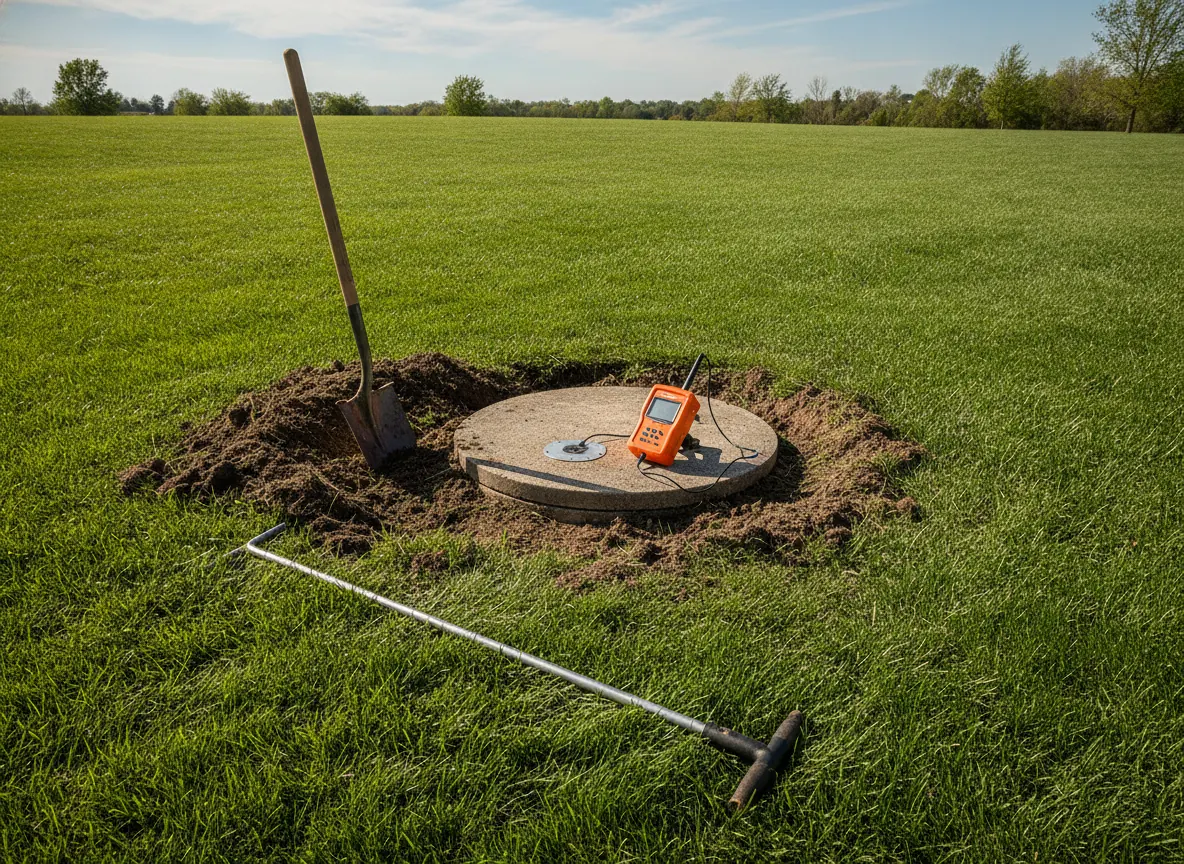
What a pumping and septic inspection visit typically involves
Every company has its own routine, but a thorough visit follows the same logic the EPA recommends for homeowners: inspect at least every three years, pump typically every three to five, and keep a record. Open the tank, look before you pump, pump, look again, write it down.
1. Finding the tank and the lid
If the tank has a riser, this takes a minute. If not, the technician follows the sewer line out from the house, probes the lawn with a steel rod and digs down to the lid, usually 12 to 24 inches in this area’s clay. Concrete tanks often have two or three lids: one over the inlet, one over the outlet and sometimes a center access. The permit drawing from Hamilton County Groundwater Protection (or the TDEC file for Bradley County) shows where the tank was supposed to go. Ask for the locating fee up front; it is the most common surprise on an invoice.
2. Looking before pumping
The liquid level is checked before anything is removed. A level at the bottom of the outlet pipe is normal. A level above it suggests the drain field is not accepting water; a level well below it suggests the tank is leaking. The technician measures the sludge and scum layers, which is the real basis for a pumping interval, and looks at the inlet and outlet baffles or tees and the effluent filter if the tank has one.
3. Pumping the tank
The vacuum hose goes in through the access lid and both the liquid and the solids are removed; a pump-out that leaves the sludge behind is not a cleaning. Heavy or compacted sludge is broken up with the hose or a backflush of liquid, and some companies rinse the walls. A 1,000-gallon tank, the Tennessee size for a four-bedroom house, normally takes 20 to 40 minutes to empty. The load goes to a treatment plant or a TDEC-permitted land-application site, and the pumper logs the address, gallons and discharge location on the state’s monthly form.
4. Inspecting the empty tank
With the tank empty, the technician checks the baffles (concrete baffles on 1970s–80s tanks rot away and let solids reach the field), the condition of the walls and seams, the lid for cracks, and the outlet filter, which is rinsed back into the tank or replaced. If the house has a pump chamber, the floats and alarm are tested. Problems found here are quoted as small repairs; a field that will not take water is noted as a finding, and an inspection determines what comes next. See septic repair.
5. Noting levels and the field
A good report records the liquid level found, the sludge and scum depths, baffle and filter condition, and a walk over the drain field looking for wet ground, surfacing effluent or unusually green grass. For a septic inspection booked for a sale, companies may add a dye test, a hydraulic load test or a camera scope of the lines.
6. The written report
You should leave the visit with a written summary: tank size, levels, what was found, photos of any defect, the next suggested pumping date and a separate price for any recommended repair. Keep it with your house papers. The Tennessee Residential Property Disclosure asks sellers about sewer and septic defects, and TCA 66-5-212 requires disclosing known percolation test results and sinkholes, so the record has value beyond the next pump-out.
7. The county Inspection Letter, a separate product
If you are selling, understand that the pumper’s report and the county’s letter are two different things. Hamilton County Groundwater Protection sells an Inspection Letter ($105) and a Recertification Letter ($180); the county inspector visits with the tank open, which is why sellers usually schedule the pump-out first. TREC Rule 1260-02-.37 requires real estate agents to tell buyers such a letter is available for a fee, but nothing in Tennessee law requires a passing septic inspection to close, and a home-inspection report must state by law that it does not address sewage disposal (TCA 62-6-302). More in selling a house on septic in Tennessee.
How long does it take? With an exposed lid, pumping and a basic inspection usually take about an hour. Locating and digging, a heavy sludge load, a camera scope or a pump chamber each add time. You do not normally need to be home, but someone should confirm where the lid is and keep pets and cars off the field. Ask when you book.
What you can do before and after the visit
Before: find any paperwork from the last pump-out or the original permit, clear the area over the tank, and do not drive on the drain field. After: there is no need to add bacteria or refill the tank; normal household use restores the level within days. Fix dripping fixtures, keep wipes and grease out of the drains, and direct gutters and sump discharge away from the field. Chattanooga’s 52.48 inches of rain a year already give the ground more water than a clay drain field wants. Put the next date on the calendar; three to five years is the EPA’s typical interval. Common questions are answered on the septic FAQ.
Slow drains or a soggy yard? Get a clear quote first.
Free, no-pressure quotes across Chattanooga, Ooltewah, Soddy-Daisy, Signal Mountain and Hamilton County.